
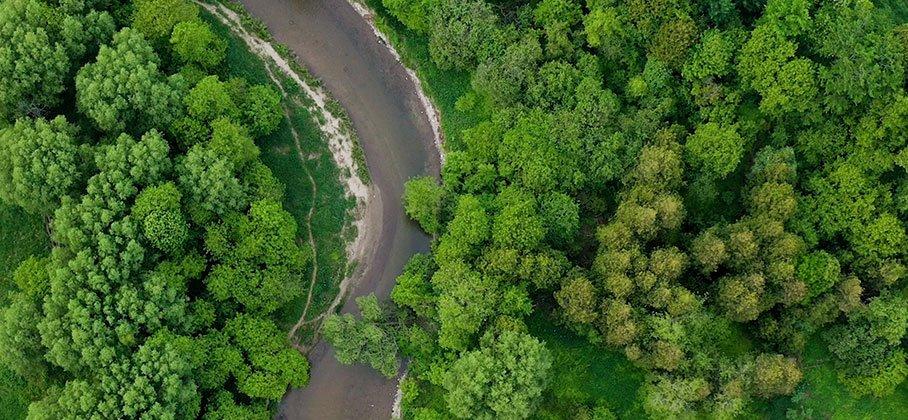
A Land Acknowledgement is a formal statement that recognizes the relationship between Indigenous peoples and their traditional territories.
Background
In 2019 municipal staff conducted research and provided a report to Council on land acknowledgement statements for the Municipality. Staff learned that land acknowledgements are a small yet significant way to show respect and acknowledge the presence of Indigenous peoples past and present. Reciting a statement is just one step in the process of full acknowledgement of Indigenous land and peoples.
Our land acknowledgement statement
At the Municipality of Port Hope, we open our Council meetings and events with the following Land Acknowledgement:
"The Municipality of Port Hope exists on the lands of the Michi Saagiig Anishnaabeg traditional territory covered by the Williams Treaties. We honour and recognize First Peoples as rights holders and stewards of the lands and waters on which we have the privilege to live, work, and play, including the Ganaraska Forest and River. We pay respect to Elders past, present and emerging."
We commit to actions towards Truth and Reconciliation by recognizing the United Nations Declaration on the Rights of Indigenous Peoples, strengthening ties with First Nations, Métis, and Inuit peoples - especially those who make their home in Port Hope, and learning from Indigenous ways of knowing and being. We do so by recognizing the past and working towards a shared future.
This is our first step to bringing attention and showing respect to the Indigenous peoples who first lived - and currently live - on the land where we live and work.
United Nations Declaration on the Rights of Indigenous Peoples
At their meeting on December 20, 2022, Council adopted the United Nations Declaration on the Rights of Indigenous Peoples. This Declaration establishes a universal framework of minimum standards for the survival, dignity, and well-being of the Indigenous Peoples of the world and elaborates on existing human rights standards and fundamental freedoms as they apply to the specific situation of Indigenous peoples.
As part of the declaration, Council also made recommendations on additional components to be considered as part of the Indigenous Awareness strategy, to be completed in 2023. These recommendations include consideration of the appropriateness of the Colonel Williams statue located in front of Town Hall as well as the photograph of the Colonel Williams statue unveiling, which is on display in the Council Chambers; to strengthen the Municipality's Land Acknowledgement statement; to enhance staff Indigenous awareness training and education to take place on National Indigenous People Day (June 21); and to explore an opportunity to feature a public education event on the National Day for Truth and Reconciliation (September 30).
Continuing education
Our efforts to reconcile with Canada's Indigenous people doesn't stop with a statement. The Municipality is invested in educating Council and staff, which will begin this year and be an on-going program. We will continue to update our page with the steps that we're taking toward continued education and understanding.
If you're interested in learning more, the University of Alberta offers a free online course called Indigenous Canada, which explores key issues facing Indigenous peoples today from a historical and critical perspective highlighting national and local Indigenous-settler relations.
Additional resources
The resource list below is not an exhaustive list. We will continue to add to the resources list over time.
94 Calls to Action from the Truth & Reconciliation Commission
- A selection from the Unreserved podcast
- Indigenous 150+ on Spotify
APTN series of shows
A selection of 5 to 7 blog posts from the Working Effectively with Indigenous Peoples Blog
- The Inconvenient Indian by Thomas King
- L'Indien malcommode par Thomas King
- An Army of Problem Solvers (Reconciliation and the Solution Economy) by Shaun Luney
- Braiding Sweetgrass by Robin Wall Kimmerer
- Dances with Dependency by Calvin Helin
- Resource Rulers by Bill Gallagher
- Seven Fallen Feathers by Tanya Talaga
- Our Story: Aboriginal Voices on Canada's Past (Collection)
- 21 Things You May Not Know About the Indian Act by Bob Joseph
- Indigenous Writes: A Guide to First Nations, Metis, and Inuit Issues in Canada by Chelsea Vowel
- La piece Muliats (Links to an external site.) par Charles Bender, Charles Buckell, Marco Collin, Xavier Huard, Natasha Kanape Fontaine et Christophe Payeur
Hosting a public gathering?
Please consider opening your public meeting, presentation or event with this Land Acknowledgement. Contact us for questions about how to incorporate the acknowledgement in your virtual or in-person gathering.