
Clean, safe drinking water is essential to a healthy community. The Municipality of Port Hope owns and operates the Port Hope Drinking Water System, which supplies water to the community for residential, commercial, industrial and institutional use. Our drinking water comes from Lake Ontario.
Backflow prevention and Cross Connection program and By-law
The Municipality of Port Hope enacted a Water Use and Backflow By-law 66/2023 on November 21, 2023. It is mandatory for all industrial, commercial and institutional, and multi-residential properties to participate in the Municipalities backflow prevention and cross connection control program.
The purpose of the by-law is to ensure that the Municipality continues to provide safe and high-quality drinking water to our community by decreasing the chance of backflow events into the Municipal Drinking Water System.
Residential property owners may be required to participate in the backflow program if their property has a cross-connection risk such as but not limited to an underground lawn irrigation system or a direct connection to a cistern/secondary drinking water source. Residential properties will be addressed on a case-by-case basis.
Backflow events occur when water from private properties flows back into the Municipal Drinking Water System, which can pose a serious health risk by contaminating the potable water supply.
Backflow occurs for one of two reasons: either back pressure or back siphonage.
Back pressure is the result of higher pressure in the private system than the supply.
Back siphonage occurs when the private water pressure drops below the pressure in the drinking water system, creating a suction effect that draws water backwards into the potable water supply.
The Municipality is held responsible under the Safe Drinking Water Act, Section 19, Standard of Care to do its due diligence to prevent backflow into the Municipal Drinking Water System. Installation of backflow preventers is required under Section 7 of the Ontario Building Code and identified in Chapter 7 of the Walkerton Inquiry Report "as part of their comprehensive distribution system program, water providers should have active programs, working together with building inspectors and public health agencies, to detect and deter cross-contamination". The Ministry of Environment, Conservation and Parks advocates that municipalities implement a backflow prevention program. This is an industry best management practice.
The backflow prevention and cross connection control program will help the Municipality to protect human health and drinking water quality, manage risks, maintain system security and achieve regulatory compliance.
To do this, the Municipality has collaborated with BSI Online to enhance the management of the Backflow Prevention and Cross Connection Control program. Property owners with installed devices are required to have their backflow prevention devices tested annually by a qualified individual and to submit the test results online via BSI Online.
Industrial, Commercial and Institutional and multi residential property owners are required to:
- Conduct a cross connection survey of the private water systems to assess risk of contamination and submit the results to the Municipality's Manager, Water.
- Install backflow prevention devices at each property.
- Submit backflow prevention device tests to BSI Online annually
Industrial, Commercial, Institutional, and multi residential property owners will receive a notification from BSI Online, on behalf of the Municipality of Port Hope regarding the due date for your backflow survey appointment / testing. It is necessary to provide a copy of this notification and/or your Customer Confirmation Number (CCN) to your tester. Your tester will be obligated to submit the backflow test results through the BSI Online web portal.
If you are a property owner classified as industrial, commercial, institutional or multi-residential, you must complete a survey every five (5) years from the date of the initial survey, and annual testing of your backflow devices is mandatory by a licensed backflow tester.
Water Treatment Process in Port Hope
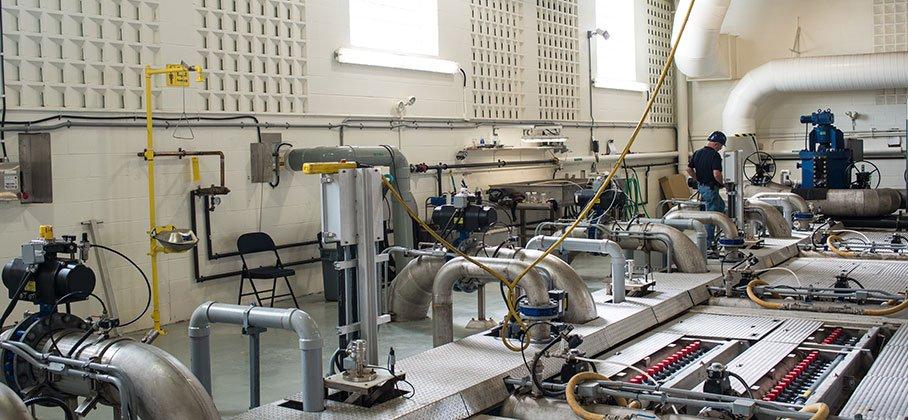
Our drinking water system consists of a water treatment plant and water distribution system. The Water Treatment Plant is located at 35 Marsh Street and uses membrane ultrafiltration technology and chlorination to treat raw water from Lake Ontario before it enters the distribution system.
This technology allows for a higher level of treatment in a smaller area in comparison to conventional water treatments. We do not add fluoride to the water and any fluoride that exists in our water is naturally occurring.
Each time you turn on your tap, flush your toilet or water your lawn, you are receiving the highest quality drinking water that is transported through a complex network of reservoirs, pumping stations and trunk watermains.
We maintain:
- 100 km of watermains
- 550 fire hydrants
- 1,200 mainline water valves
- 4,820 residential and commercial water service connections and water meters
The Municipality of Port Hope Quality Management System Operational Plan describes how the Municipality meets or exceeds the requirements outlined in the Ministry of the Environment's Drinking Water Quality Management Standard. The Operational Plan states that we are committed to:
- Providing safe drinking water
- Obeying all applicable legislation and regulations
- Reviewing, maintaining and continually improving our drinking water system
- Treating and producing water that is clean and reliable
- Holding the highest standards of quality
- Operating in an environmentally responsible manner
- Providing a sustainable drinking water system
- Educating the public about the importance of clean drinking water
email us for the full Quality Management System Operational Plan
Port Hope offers a stationary bulk water filling station. The system dispenses a high volume of water over a short amount of time and is to be used to supply large quantities of water. The self-serve station is located at the Water Treatment Plant (35 Marsh Street), outside the fence on the south-west side of the property.
To use the station, you must set up a bulk water customer account in advance. The station also requires a 3" Camlock connection. Filling any tank or container under 1,000 litres is not allowed, as doing so may cause overflow, equipment damage, or customer injury.
Setting up your bulk water customer account
To create an account, please visit the Finance Department (Water Billing staff) at Town Hall, 56 Queen Street during regular business hours. A prepaid balance is required to activate the account. Payment must be made via cash, debit, or cheque for bulk water/set up. To save time, you can email water billing staff to set up your account before you arrive at Town Hall for initial payment.
Once your account is set up, you will be issued a programmed FOB linked to your customer account code with a user password. You'll use this FOB at the bulk water station to start the pumps. Water usage is metered, recorded, and deducted from your prepaid account balance based on the volume filled.
Rates and billing information
- Bulk water rates are listed in the Municipality's Fees and Charges.
- Replacement FOBs are at an additional cost
- For billing questions or help setting up an account, contact Water Billing by email or call 905-885-4544 x2202
Drinking water reports: View the drinking water system reports. The Municipality of Port Hope follows the testing, monitoring and reporting program outlined in the Safe Drinking Water Act.
Seasonal taste and odour episodes
Have you ever noticed an earthy taste and/or smell coming from the drinking water in the late summer and early fall? That is called seasonal taste and odour episodes and it is very common. Your water is safe to drink if you detect earthy or musty odours.
These taste and odour episodes are caused by seasonal biological changes in Lake Ontario and typically occur when the lake temperature rises. These changes are not harmful to public health and the Municipality's water quality is not otherwise affected. This is a typical occurrence in many other municipalities along the shores of the Great Lakes.
Laboratory testing of both the raw and treated water confirms that municipal water meets all Ontario Drinking Water Quality Management Standards as set by the Ontario Ministry of the Environment.
To reduce the taste and odour in the drinking water residents can refrigerate a jug of water, or add ice cubes and a few drops of lemon juice to the water.