
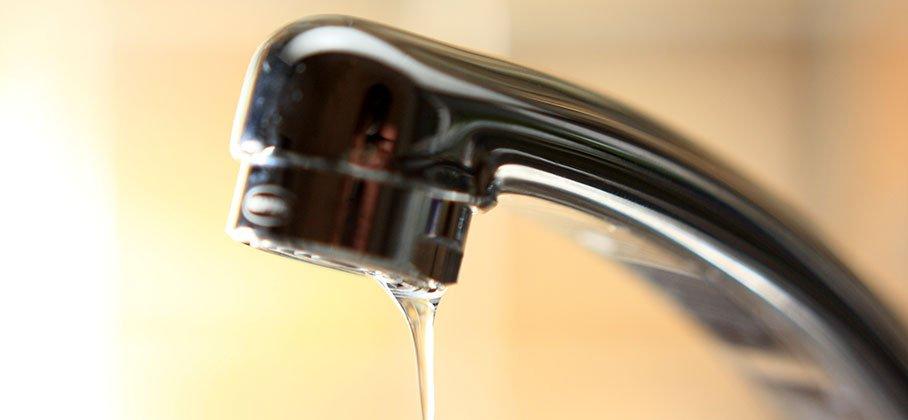
Check your water usage devices (toilets, taps, washing machines, etc.) on a regular basis. Malfunctioning water devices can add up to large water consumption bills and a leak even as small as the head of a pin will waste water and increase your water bill.
Leaky Toilet?
Have you found a toilet leak in your home? There are three tests that you can try to see if a toilet is leaking. It is good practice to check your toilets, taps, washing machine, etc. on a regular basis. Leaky toilets are often the cause of high-water bills and could waste more than 450 liters of water a day.
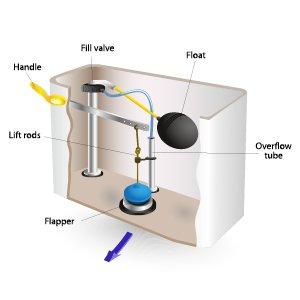
- You must wiggle the handle to make a toilet stop running
- You hear sounds from an unused toilet
- You must hold the handle down to allow the tank to empty
- You see water running over the top of the overflow inside the tank cover. This is a sign that the refill valve is leaking or needs adjustment. You can sprinkle a little talcum powder on top of the water in the tank to see if the water is running over the top of the overflow pipe
- You see water dripping down the sides inside of the toilet bowl long after it has been flushed
- Water drops out of the refill tube into the overflow pipe
- A toilet runs or refills without you touching the handle
If your toilet shows none of the symptoms above, it could still have a silent leak, causing a high-water bill.
- Remove the toilet tank cover and set it aside
- Remove any 'in-tank' bowl cleaners that colour the water
- Begin the test with clear water in the tank and bowl
- Place enough food colouring or instant coffee in the tank's water to get a deep colour (may stain the tank)
- Wait 30 minutes. Your toilet is leaking if the dyed water has made its way into the toilet bowl. A proper operating toilet will store water in the tank without water running into the bowl.
If the dye test shows the toilet is leaking, the diagnostic test can identify which part of the tank is affected and needs repair.
- Draw a pencil line on the back wall inside the toilet tank at the waterline
- Turn the water supply off, either under the toilet tank or at the main shutoff
- Wait 20 to 30 minutes. If the water level remains at the pencil mark, the leak is likely occurring at the fill valve or ballcock (the unit on the left side of the tank with the float attached). If the water level falls below the pencil mark, the leak is likely occurring in the flapper valve (the unit located in the bottom center of the tank)
In most cases, the flapper valve is usually the cause of leaking toilets.
- Turn the water off to the toilet before going to bed. If you must use the toilet during the night, fill a bucket with water and dump the entire bucket of water into the toilet bowl.
- Check the water level in the morning. If the water level is lower or even with the edges of the tank flapper, the leak is caused by either a bad flapper valve or a damaged toilet flapper valve seat. If the tank is almost empty and the water level is below the edges of the toilet valve seat, the leak may be caused by a damaged gasket under the flapper valve. In this case, the leak can appear on the floor around the base of the toilet. The toilet tank will have to be separated from the toilet bowl to change the gasket.
If you notice water on the floor near a toilet, the following problems could be present:
- Condensation could be forming on the toilet tank during humid weather
- The wax-sealing ring under the toilet bowl may have disintegrated
- The toilet bowl may be cracked
- The connections under the toilet tank may be leaking
- The toilet tank water level should be below the overflow pipe. If it is not, the float ball should be adjusted.
- If you have to jiggle" the toilet handle after flushing, adjust the chain so the flapper valve closes properly.
- If your toilet is an older 22-litre model, consider replacing it with a modern 6-litre low-flow toilet. You will experience savings on your water and sewer bill and save water.
If you find a leak, contact a licensed plumber right away to have it fixed.
The Municipality has a reduction clause in the current By-law for water and wastewater bills. For more information please contact us by email or call 905-885-4544.
Tips for reducing outdoor water usage
Watering your lawn frequently results in higher water bills and sewer rates are applied. Remember: you are responsible for all water consumption on your property.
- Only water your lawn when it needs it
- Use a rain gauge to figure out when your lawn needs watering (less than 1 inch of rain per week)
- Water your lawn when it is difficult to push a screwdriver into the soil
- Place sprinklers where the water lands on areas that need it (don't water it if it doesn't grow)
- Use a timer to control watering (about an inch of water flows per 30 minutes)
- Water your lawn between 6 and 10 a.m. to prevent water loss through evaporation
- Avoid watering on windy days
- Use soaker hoses to save up to 70 per cent of water usage compared to sprinklers
- Keep mower blades sharp
- Leave grass clippings on your lawn after mowing (the clippings contain 50 per cent water and they will fertilize the lawn)
- During the summer months, irrigation systems are a common source of high water use. Automated irrigation systems should be checked regularly to be sure they are functioning properly and have no leaks or broken sprinkler heads.
About my water meter
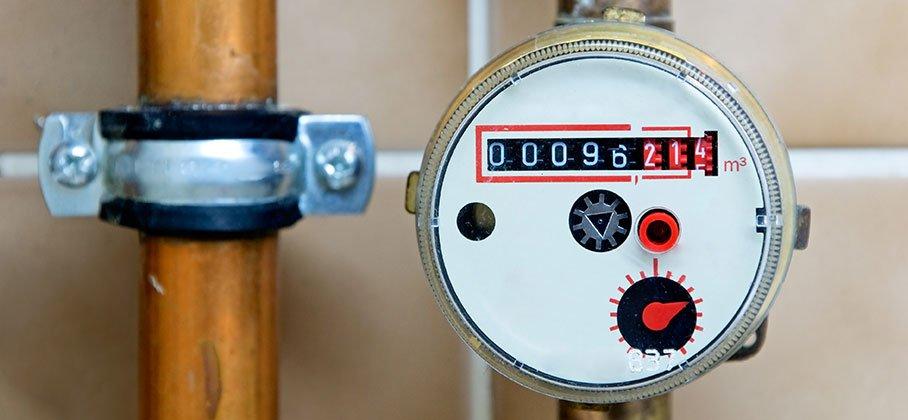
Your water meter measures the amount of water you use at your property in cubic meters. One cubic meter equals one thousand (1,000) liters. Your water meter is found inside your home typically in the basement. Municipality of Port Hope staff calculate your water and wastewater bill by reading the automatic reading box (ARB) that is mounted to the outside of your building.
You can use your water meter's leak indicator to detect plumbing issues that may cause higher than normal consumption on your water and wastewater bill. There are varying models of water meters. Depending on which model you have, the leak indicator is a blue triangle at the center of the dial, or a red circle to the bottom right of the dial. Turn off all water sources and watch your meter for 10 to 15 minutes. If the leak indicator continues to turn there is likely a leak.
If you are having issues with your water meter contact the Finance department by email or call 905-885-4544.
The Neptune Water Meter Replacement Project is Successfully Completed!
We are pleased to announce the successful completion of the Neptune water meter replacement project -- the first full water meter changeout program in the Town's history.
With an installation success rate of over 97%, Port Hope has exceeded industry norms, thanks to the cooperation of residents and the dedication of staff and contractors. The project was completed smoothly and served as a valuable learning experience for all involved.
We extend our sincere thanks to the community and everyone who contributed to the success of this important infrastructure upgrade.
| Question | Answer |
|---|---|
| Q1: Why is my water bill now higher/lower than before? | Water meters, like most mechanical devices, wear out over time. They typically last 10-20 years before needing replacement. As they age, older meters often slow down and under-measure water use, meaning you may have been paying for less water than you were actually using, in some cases 10 to 50% less. The new meters are highly accurate (close to 100%), so your bill now reflects your true water use. If your bill has increased since the replacement, it's likely because your old meter wasn't recording all of your usage. Water meters typically do not over-read. So, if your bill has decreased since replacement, it's likely because you're using less water than before. Meters are designed to either measure accurately or slightly under-measure as they age and they do not overestimate usage. Over time, the new meter will also gradually slow down, and in 10-20 years, it may again slightly under-measure. Replacing the meter ensures that everyone is paying their fair share based on actual water use. |
| Q2: What's the difference between the water charge and the sewer charge on my bill? And why is the sewer charge higher? |
Your sewer charge is based on the same volume of water you use. The assumption is that most of the water coming into your home eventually goes down the drain. While some activities (like watering gardens or filling a pool) don't send water to the sewer, it's not practical to measure those amounts separately for every home. Why sewer is more expensive: Treating wastewater is generally more complex and costly than treating drinking water. Wastewater must be cleaned to strict environmental standards before it can be safely released back into the environment. For this reason, the sewer portion of your bill is typically 30 to 40% higher than the water portion. |
| Q3: Why did the letter say my water could be shut off if I didn't replace my meter? Can you really do that? | The water meter replacement program is mandatory for all customers. This is because accurate, functioning meters are essential for fair billing and for maintaining the water system. The Municipality of Port Hope owns the water meters (just like Hydro One owns its electrical meters), and we replace them when necessary. This program is supported by a municipal By-law that allows the Municipality to require meter replacement and, if necessary, apply penalties (including water shut-off) for non-compliance. It's important to note that water shut-off is a last resort and only applies to customers who have been contacted multiple times and have chosen not to participate. Most customers booked their meter change promptly after receiving notice. |
| Q4: What is happening with the 3% of customers who didn't comply with the meter replacement program? | A: The Municipality has now taken over these cases from Neptune and is working directly with the property owners. In some situations, the meters could not be replaced due to unique or extenuating circumstances like:
For the remaining non-compliance cases, staff are contacting owners to arrange appointments or resolve issues. Our goal is to ensure every property has a working, up-to-date meter so billing is accurate and the water system operates efficiently. |
| Q5: What are the benefits of the new water meters? | A: The new meters offer several advantages for both residents and the Municipality:
These upgrades ensure fair billing, help residents manage their water use, and improve the reliability of the entire water system. |
| Q6: Who can I contact if I have questions about my water bill or meter? | A: Every property's water use and billing situation is unique. If you have a question about your bill, water meter, or usage, please contact Water Billing by email or by phone at 905-885-4544. Our staff can review your account details, explain your bill, and help address any concerns. |
You can report an issue if you have a water leak or need a water meter replacement. Please note that Report an Issue is NOT meant for emergencies. If you are reporting an emergency issue please call our emergency line.
Report an issue